This guide is part of our complete guide to historical sites in Scandinavia.
Sweden’s historical sites are spread out, and that is the main thing to plan around. Stockholm gives you two world-class stops without leaving the city, but the best Viking material is on islands and in the countryside, and some of it is only reachable in summer. Here is how we would prioritise.
Birka: Sweden’s First Town
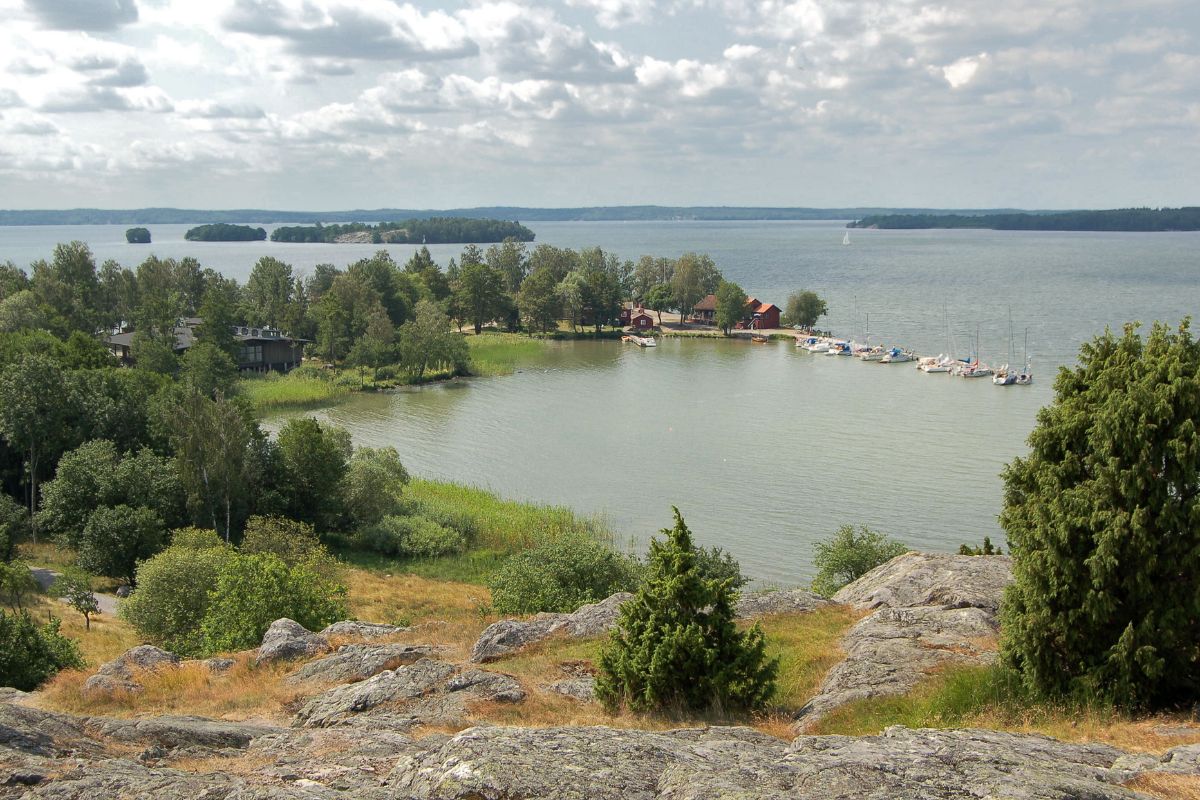
- Founded on the island of Björkö in Lake Mälaren in the 750s, Birka was an international trading port, the place Arab silver, Frankish glass and Baltic furs all passed through.
- There are over 3,000 known graves on the island.
- In 2024 archaeologists identified a Viking shipyard and a 300-metre row of stakes in the harbour, probably a defensive barrier. This is an actively producing site, not a finished story.
- UNESCO-listed with Hovgården in 1993.
The critical planning point: Birka is reached by boat from Stockholm, and the ferries are seasonal, roughly May to September. Turn up in October and you simply cannot get there. Budget a full day; the crossing is about two hours each way. Source: Visit Sweden.
Gamla Uppsala: The Royal Mounds
- Three vast burial mounds, dated to roughly 550–625 AD, raised for figures important enough that later tradition assigned them to gods.
- This was the site of the pagan temple luridly described by Adam of Bremen in the 11th century, complete with accounts of nine-yearly sacrifices. Treat that source with caution; Adam never visited, was writing Christian polemic, and archaeology has not confirmed the temple as he described it.
- Hundreds of smaller graves surround the three big mounds, plus a museum and a medieval church built on the pagan site.
Getting there: about 40 minutes by train from Stockholm to Uppsala, then a short local bus. Half a day.
The Vasa: A Catastrophe You Can Walk Around
- A Swedish warship that sank about 1,300 metres into her maiden voyage in 1628, having been built top-heavy with two gun decks because the king wanted them.
- The Baltic’s cold, brackish, low-oxygen water, and the absence of shipworm, preserved her almost whole. She was raised in 1961.
- Roughly 95% of what you see is original timber. It is, object for object, the most staggering thing in Scandinavia.
Not Viking, but do not skip it. It is in Stockholm, on Djurgården, and needs about two hours.
Visby, Gotland: The Walled Town
- The Baltic’s commercial capital from the 12th to 14th centuries and a Hanseatic powerhouse.
- The 3.6 km town wall with around 50 towers still encircles the old town. one of the best-preserved medieval walls in northern Europe.
- Medieval Visby had 15 churches inside the walls, more than any other Swedish town; several stand as roofless ruins you can walk into.
- UNESCO-listed in 1995.
Getting there: ferry from Nynäshamn (about 3 hours) or a short flight from Stockholm. Gotland in August is peak season and busy; late May, June or September are better.
The Lesser-Known Picks
- Ales stenar, Skåne: a 67-metre stone ship of 59 boulders on a cliff above the Baltic, and one of the most atmospheric prehistoric sites in Europe. Free, open, and usually near-empty.
- Tanum rock carvings (UNESCO 1994) — thousands of Bronze Age petroglyphs in Bohuslän.
- The Rök runestone, Östergötland, the longest known runic inscription in the world. A widely covered 2020 reinterpretation argued it is about a climate crisis and fear of a coming Fimbulwinter rather than a battle; that reading is debated, not settled.
PastPathways may earn a commission from bookings made through links on this page, at no extra cost to you. We only recommend tours we would point a friend toward.
Where to Stay in Sweden
Stockholm covers Birka, Gamla Uppsala and the Vasa. Visby needs its own nights.
